- Past Exhibition
- Feature Exhibitions
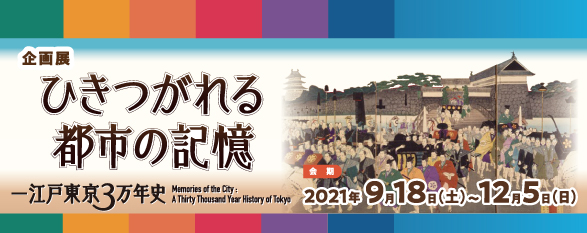
Memories of the City: A Thirty Thousand Year History of Tokyo
- Dates
- 2021.9.18 (Sat)-2021.12.5 (Sun)
- Venue
- In the 5F Permanent Exhibition Area
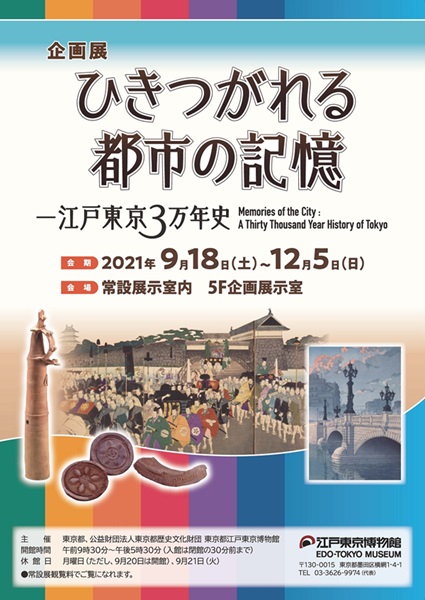
Modern-day Tokyo is built atop thousands—and tens of thousands—of years of history. The Paleolithic era, during which traces of human life have been found in this area, dates back more than 30,000 years. It’s a long time to imagine, but the ways in which people lived and aspects of society in the past have been identified by ruins discovered in the process of urban development, as well as precious materials handed down from person to person over the years.
Since its opening in 1993, the Edo-Tokyo Museum has dedicated itself to sharing the history and culture of Edo-Tokyo: however, from April 2022, large-scale renovation works will commence at the Museum. Before this temporary close, we will take the opportunity to reflect back on the history of the city we live in, from the Paleolithic era to the present day.
Exhibition Outline
- Dates
- 2021.9.18 (Sat)-2021.12.5 (Sun)
- Venue
- In the 5F Permanent Exhibition Area
- Hours
- 9:30-17:30
(土曜日は ~19:30)
※入館は閉館の30分前まで - Closed
- Mondays (however, exhibition will be open September 20), Tuesday September 21
- Organized by
- 東京都、公益財団法人東京都歴史文化財団 東京都江戸東京博物館
- Outline of event
-
Exhibition period: Saturday, September 18 to Sunday, December 5, 2021
Location: Edo-Tokyo Museum, Permanent Exhibition, 5th Floor Feature Exhibition Room (1-4-1 Yokoami, Sumida-ku, Tokyo)
Phone: 03-3626-9974 (switchboard)
- 3-minute walk from West Exit of Ryogoku Station, JR Sobu Line
- 1-minute walk from A3 or A4 Exit of Ryogoku Station (Edo-Tokyo Hakubutsukan-mae), Toei Subway Oedo Line
- Toei bus: 錦27, 両28, 門33, 墨38 bus routes
Sumida City circulation bus “Sumida Hyakkei Sumimarukun / Sumirinchan (Southern Route)”
Get off at “Toei Ryogoku Eki-mae (Edo-Tokyo Hakubutsukan-mae)” and walk 3 minutes.
Opening hours: 9:30 am to 5:30 pm (Saturday:to 7:30 pm) *Admission until 30 minutes before close
Days Closed: Mondays (however, exhibition will be open September 20), Tuesday September 21
*The permanent exhibition admission fee applies for this exhibition.
Admission fee (incl. tax) General 600 yen University & technical school students 480 yen Junior high school students (from outside Tokyo), high school students, those aged 65 years and older 300 yen Elementary & junior high school students (from Tokyo) or younger Free of charge *College, high school, or junior high school students will need to present a student ID card. Visitors aged 65 years or more will need to present proof of age.
*The permanent exhibition admission fee is free (for this exhibition) in the following cases. Preschool children. Anyone who has a physical disability certificate, intellectual disability certificate, rehabilitation certificate, mental health and welfare certificate, or an official designation as an atomic bomb survivor, as well as their attending caregivers (up to two people).
*Please be aware that the exhibition period, opening hours, admission fees, and various discount services may change depending on the situation of the COVID-19 pandemic. Please check the latest information on the Museum’s website before visiting.
*We recommend you make an advance reservation online using the ASOVIEW service, which we have recently introduced to help prevent the spread of COVID-19. Click here to purchase an electronic ticket for a specified date and time (external site).
Exhibition Structure
プロローグ 現代によみがえる「歴史」の痕跡
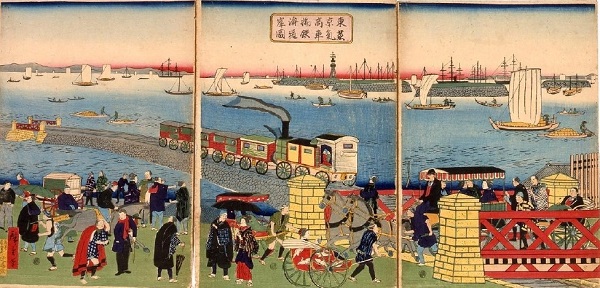
都市の開発が進むなかで、突如としてかつてそこに暮らした人々の痕跡が姿を現すことがあります。近年では、新たに開業した高輪ゲートウェイ駅周辺から線路の遺構「高輪築堤」が発見されました。都市の景観は変わっても、こうした当時を物語る遺構や資料を通して、歴史を身近に感じることができるのではないでしょうか。
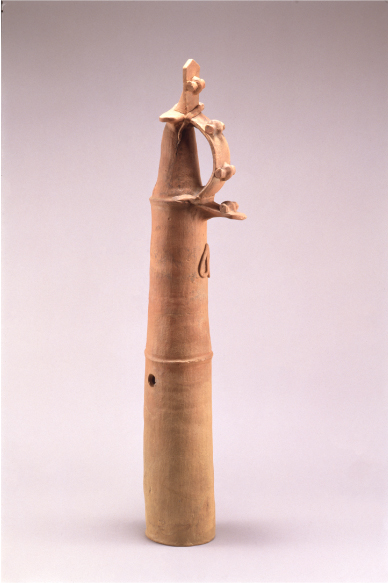
第1章 旧石器時代から古墳時代まで|生み出す力、暮らしの工夫
かつて人々は、石や木、土といった身近な素材を加工し、生活に応じて様々な道具を作りだす術を身につけていきました。土の中から発見された当時の品々は、大陸や朝鮮半島の技術や文化も取り入れながら生活を豊かにしていく様子を、現代の私たちへ教えてくれます。
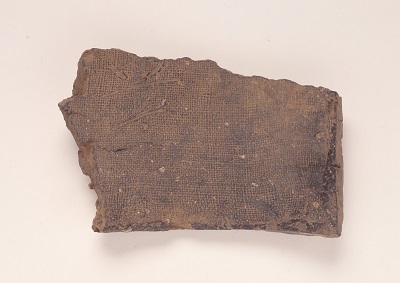
第2章 奈良時代から鎌倉時代まで|武蔵国と武士の登場
大化の改新以降、中央集権国家の成立に向けて様々な仕組みが整えられていきました。現在の東京都、埼玉県、神奈川県の一部にあたる武蔵国は21の郡からなる大国で、全国に建立された国分寺の中でも、武蔵国分寺は特に規模の大きいものでした。各郡の文字が刻まれた瓦が出土しており、国分寺の造営に武蔵国内の全郡が関わったことがわかります。
また、10~11世紀には有力豪族のなかから武士が登場し、勢力を拡大していきました。

第3章 南北朝時代から戦国時代まで|江戸の成り立ち
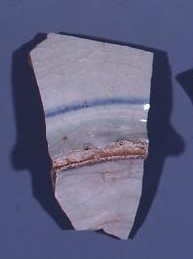
江戸城は、上杉氏が支配する関東南西部の拠点として、扇谷上杉家の家臣であった太田道灌により築かれました。
その後江戸城は、小田原を拠点に勢力を伸ばしていた北条氏の支配下となりました。しかし、1590年(天正18)の豊臣秀吉による小田原攻めで北条氏は敗北し、江戸城は明け渡されました。そして徳川家康は、江戸を本拠地に定め、江戸城と城下町の整備に取りかかりました。

第4章 江戸時代|一大都市への成長とにぎわい
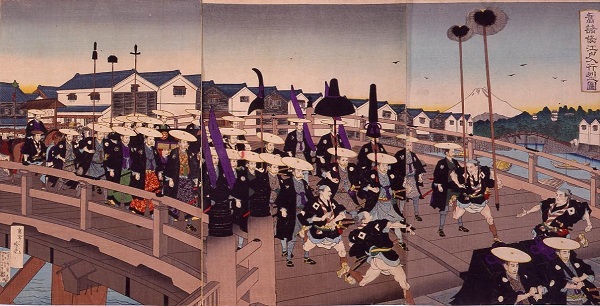
1603年(慶長8)徳川家康が江戸に幕府を開きました。政権の中枢としてふさわしい都市にすべく、全国の諸大名を動員して江戸城の造営と城下町の整備が開始されました。明暦の大火など度重なる火災に見舞われながらも、江戸の町の改造と拡張は続けられ、18世紀には世界有数の都市にまで発展しました。

第5章 明治時代から現代まで:近代国家としての首都東京
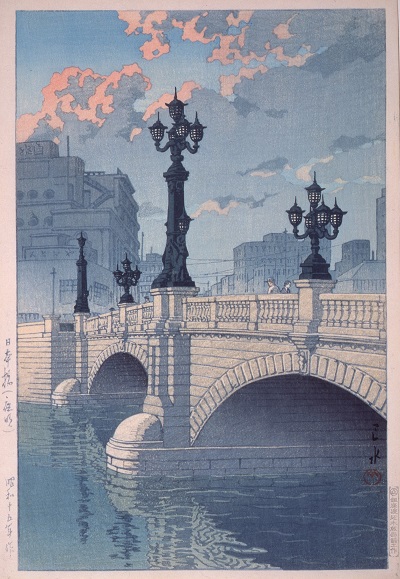
明治時代の幕開けにより、かつての城下町は近代的な都市へとつくり替えられていきました。しかし1923年(大正12)に関東大震災が発生。復興をきっかけに交通が発達するとともに東京市は郊外へ範囲を広げ、35区となりました。
こうして復興を遂げた東京を、度重なる空襲が襲いました。再び壊滅的な被害を受けながらも、戦後の復興と1964年(昭和39)の東京オリンピック開催により、今日においても欠かせないインフラが整えられました。東京を象徴する新たなランドマークが次々と誕生し、今も都市の発展は続いています。


エピローグ ひきつがれる「歴史」とともに
災害や戦争、繰り返される都市開発により東京は絶えず変化を続けてきましたが、歴史的な建造物やその地域の歴史を物語る様々なスポットは、価値を問い直されながら保存や活用が図られています。今日の東京に改めて目を向けてみると、長く親しまれてきた名所と新たなランドマークが共存しながら発展を続ける東京の姿が見えてきます。
Explanatory Video
【えどはく学芸員がみどころ紹介】
企画展「ひきつがれる都市の記憶―江戸東京3万年史」
