
- Past Exhibition
- Off-site Exhibitions
International Exchange Exhibition “Tokyo, Birth of a Modern City (Prints from the 1920s-1930s from the Edo-Tokyo Museum)” [held at The Japan Cultural Institute in Paris]
- Dates
- 2024.11.6 (Wed)-2025.2.1 (Sat)
- Venue
- Off-site
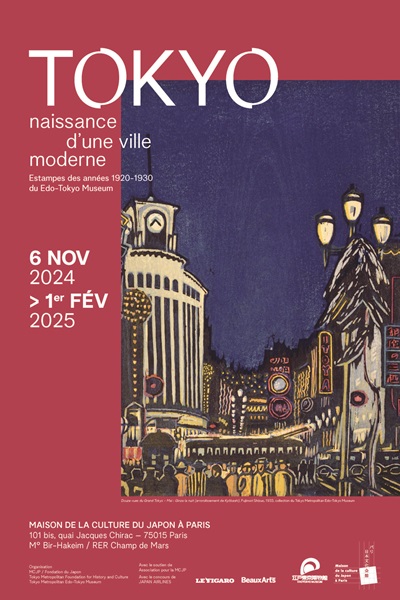
The second collection exhibition during the Tokyo Metropolitan Edo-Tokyo Museum’s temporary closure, “Tokyo, Birth of a Modern City (Prints from the 1920s-1930s from the Edo-Tokyo Museum),” will be held in collaboration with and at the Maison de la Culture du Japon à Paris (Paris, France). The first of these exhibitions was held in 2022 under the name “Un bestiaire japonais – Vivre avec les animaux à Edo-Tokyo (XVIIIe-XIXesiècle)” (English title: “Ikimono: Life with Animals in Edo Tokyo”).
Following the Meiji Restoration in 1868 (the first year of the Meiji Era), the city of Edo underwent rapid modernization, transforming into what we know as Tokyo today. When the Great Kanto Earthquake of 1923 swept away the old townscapes, with its vestiges of the past, the city was further transformed into one of steel and concrete, particularly in the central areas.
This exhibition will spotlight the 1930s as an era of great change, in which various woodblock printmakers created prints of urban landscapes in the wake of the unprecedented disaster that was the Great Kanto Earthquake, and the recovery from it. There was a reevaluation of the traditional purpose of ukiyo-e prints, which was to depict the scenery and customs of the period, and many printmakers turned their attention to the city’s transformation. The woodblock prints express both the sense of euphoria that came from the prospect of change, as well as the melancholy of losing the vestiges of the past, in a richly emotional and sensitive manner.
This exhibition will present this collection of modern woodblock prints of the Tokyo scenery in Paris—the site of numerous past exhibitions of ukiyo-e prints. We hope that this exhibition will provide an opportunity for mutual reflection on the cities of Paris and Tokyo, generate interest in modern Japanese woodblock prints, and deepen people’s understanding of the city of Tokyo.
Exhibition Outline
- Dates
- 2024.11.6 (Wed)-2025.2.1 (Sat)
- Venue
- The Japan Cultural Institute in Paris, 2nd floor exhibition hall
101bis quai Jacques Chirac 75015 Paris France - Hours
- Tuesday to Saturday 11:00 to 19:00 (Last admission 18:30)
- Closed
- The museum is closed on Sundays, Mondays, holidays, and during the year-end and New Year holidays.(December 25th to January 3rd)
- Organized by
- The Japan Foundation The Japan Cultural Institute in Paris, Tokyo Metropolitan Foundation for History and Culture Tokyo Metropolitan Edo-Tokyo Museum
- Cooperated by
-
Association pour la MCJP, Japan Airlines Co., Ltd.
- Admission
-
General admission 5€, discount admission 3€
- Seminar
-
Opening Commemorative Lecture
“Tokyo, Birth of a Modern City (Prints from the 1920s-1930s)Speaker
Shuko, KOYAMA (Tokyo Metropolitan Edo-Tokyo Museum)
Date
Tuesday, November 5, 2024 18:00-19:30Lecture
Modernity: New Customs in Interwar TokyoSpeaker
Sandra Schaal
Date
Friday, November 22, 2024 18:00-19:30 - 関連情報
-
本展覧会に関する詳しい情報は、パリ日本文化会館のホームページをご覧ください。
Exhibition Structure
プロローグ 近代化の進展
1868年1月、江戸幕府に代わる、新政府「明治政府」が発足した。幕末から明治に至る変革の時期に、西洋文化が流入し、版画界にも大きな変化をもたらしました。
小林清親や井上安治により刊行された、のちに「光線画」と称される木版画は、これまでの伝統的な浮世絵とは異なり、西洋から流入した油彩画や水彩画、石版画、写真の影響を受け、光や影、自然の変化のような儚い現象を巧みに捉えようとします。
第1章 震災前の東京
近代化が進む大正期の東京では、従来の錦絵が廃れていく一方で、画家自身が彫りと摺りを行ういわゆる「創作版画」と、版元の下で彫師・摺師・画家が新しい表現を研究しながら制作を行う「新版画」が多彩に展開するようになりました。それぞれの作品では、新たな版画表現の工夫が凝らされ、都市の風景や人々の暮らしを題材に、画家の個性が色濃く反映されています。本章では、関東大震災前の作品から、江戸の面影残る東京と、美人画・役者絵を紹介します。
(1)江戸の面影と東京
(2)美人画・役者絵-よみがえる浮世絵
第2章 関東大震災
1923年(大正12)9月1日午前11時58分に発生した関東大震災は、マグニチュード7.9と推定され、東京及び南関東を中心に大きな被害をもたらしました。さまざまなメディアによって都市の壊滅的な被害が記録され、版画でもそれぞれの視点により喪失が描き出されました。本章では、震災の被災風景を取り上げた版画に加え、被災資料や震災直後に都市の中につくられたバラック建築なども写真より紹介します。
第3章 東京復興
関東大震災で壊滅的な被害を出した東京では、震災直後から「帝都復興事業」という名の都市計画によって復興がはじまりました。幹線道路の新設と拡張、河川運河の改修、一部の土地区画整理などが行われ、公園なども新設されました。この復興事業により、街並みが整理され、東京は江戸の風情を残した震災前の街並みから、鉄筋コンクリート造のビルが建ち並ぶ近代的な街並みへと変貌を遂げました。一方、東京に隣接した地域の人口は増加し、鉄道網の発達により、郊外に住宅地が形成されます。1932年(昭和7)、東京市に隣接する5群82町村が東京市に編入され、35区の大東京市が成立しました。本章では、復興を遂げた都市風景を描写した版画作品を紹介します。
(1) 鉄とコンクリートの街
(2)大東京の成立
第4章 モダン東京と人々
復興を遂げた東京の盛り場では、カフェーや劇場などの娯楽施設や百貨店が生み出す華やかな消費文化が席巻しました。銀座や浅草、新宿などは、夜もイルミネーションに包まれ、「モボ」「モガ」と呼ばれる流行の先端を行く若者が街に現れ、享楽的な流行を新たに作っていきました。本章では、版画家にとっても格好の題材となった、この時期に花開いた都市文化とそこに集う人々を資料とともに紹介します。
(1)都市と女性たち
(2)モダン都市生活
エピローグ―うつりゆく風景
その後、第二次世界大戦に突入し、東京は空襲によって再び壊滅的な被害を受け、復興後、より一層、過去の風景を思い起こすことも難しくなりました。本章では、戦後の東京風景版画より、古い面影を追い求めるかのような作品を紹介します。
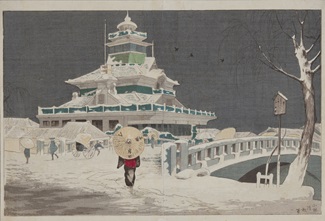
1876年(明治9) 小林清親/画
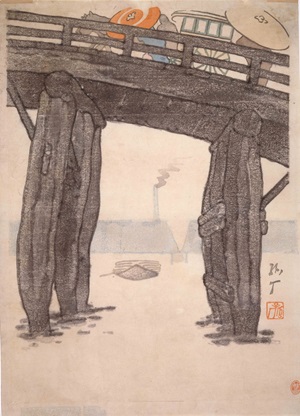
1913年(大正2) 戸張孤雁/画
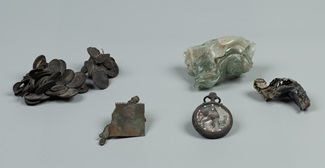
1923年(大正12)
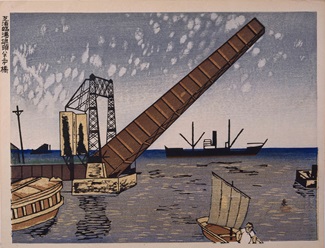
芝浦臨港埠頭ハネ上げ橋
1930年(昭和5) 小泉癸巳男/画
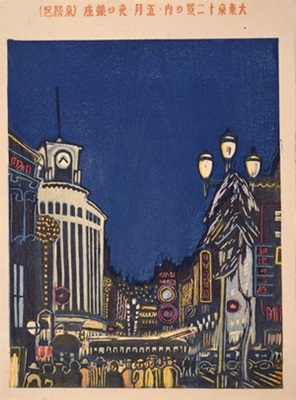
1933年(昭和8) 藤森静雄/画
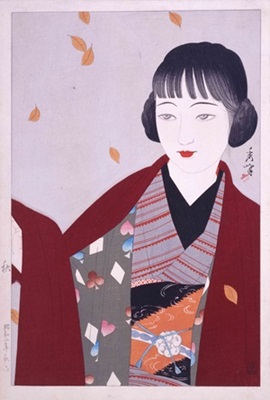
1927年(昭和2) 山川秀峰/画
カタログ
 パリ日本文化会館地上受付、オンラインで販売予定
28.00 €(税込)、判型22×28cm、176ページ、全文仏語
発行:2024年11月
出版:Éditions Gourcuff Gradenigo、パリ日本文化会館
収録テキスト執筆:小山周子(東京都江戸東京博物館学芸員)、新田太郎(同左)、岩崎茜(同左)、平戸杜飛(同左)、ミカエル・フェリエ(中央大学文学部教授)
