- Past Exhibition
- Feature Exhibitions
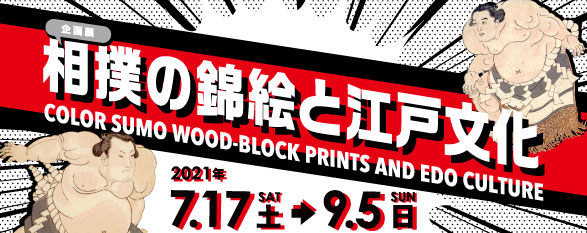
Color Sumo Wood-Block Prints and Edo Culture
- Dates
- 2021.7.17 (Sat)-2021.9.5 (Sun)
- Venue
- 5F Feature Exhibition Gallery
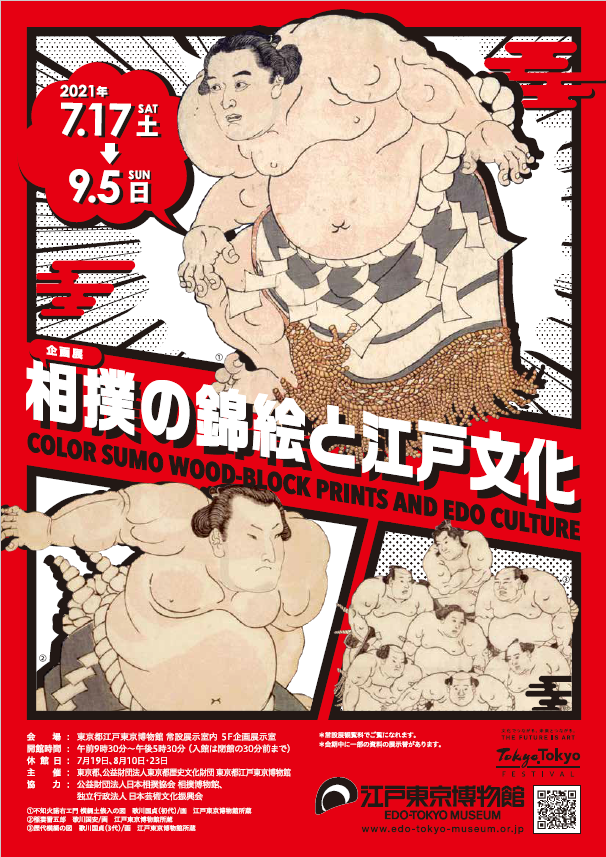
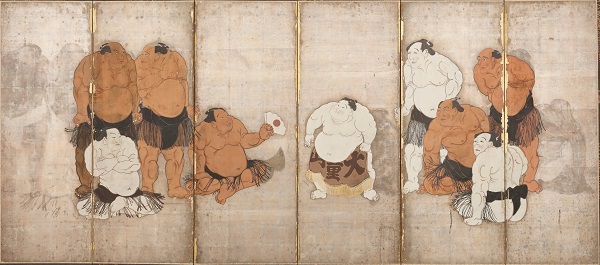
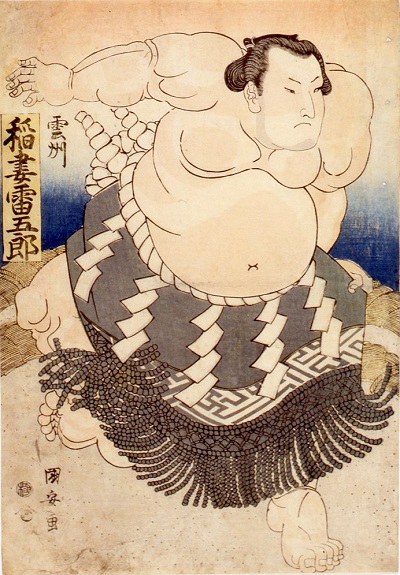
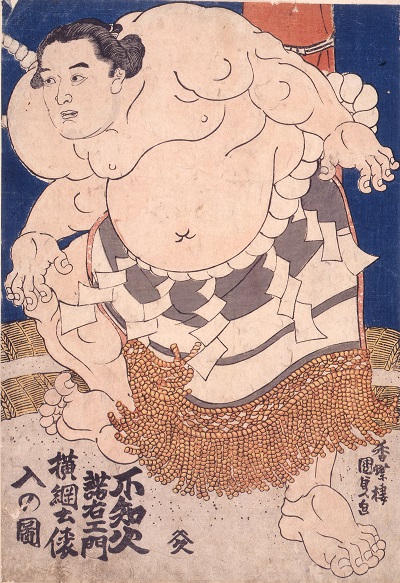
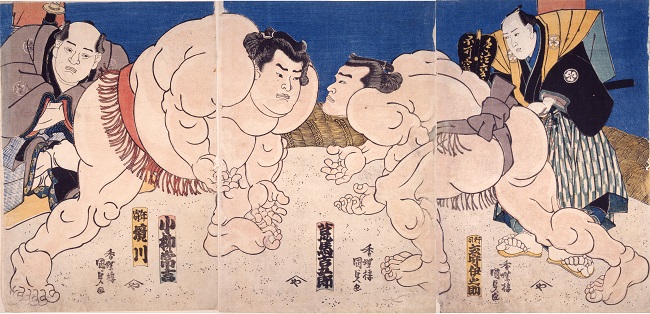
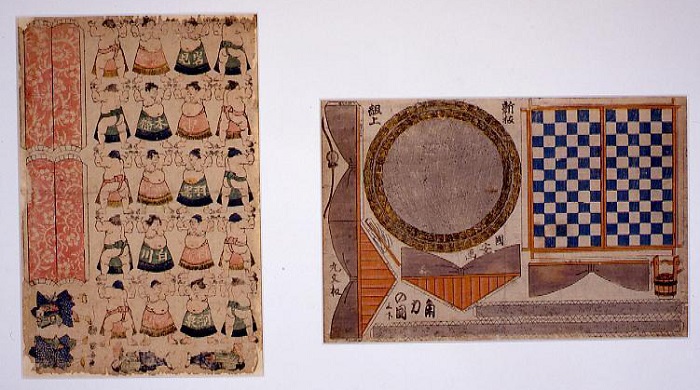
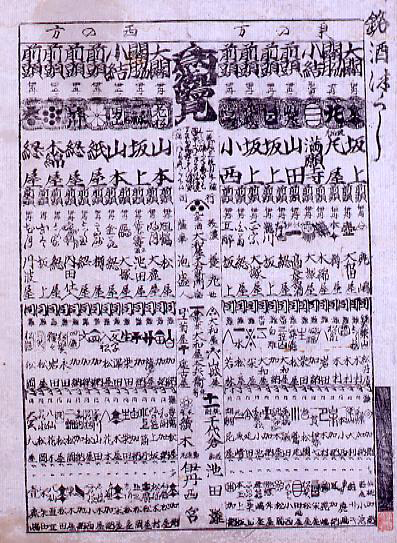
During the Edo period, watching sumo wrestling became a popular form of entertainment for common people, and with the growing success of professional wrestlers, sumo flourished around the end of the 18th century. This was around the same time as the golden age of multi-colored nishiki-e woodblock printing. Following the development of prints of popular actors and beauties, new woodblock prints depicting the unique body shapes and facial features of each sumo wrestler started to appear—a departure in style from previous simpler sumo woodblock prints. Sumo woodblock prints, which realistically conveyed images of the wrestlers and the lively atmosphere of sumo wrestling, played a key role in supporting enthusiasm for sumo as entertainment and were essential in driving the popularity of star wrestlers. Presented with the cooperation of the Sumo Museum and the National Theatre, this exhibition will introduce the diverse appeal of sumo in the city of Edo, centering on nishiki-e woodblock prints of sumo.
Exhibition Outline
- Dates
- 2021.7.17 (Sat)-2021.9.5 (Sun)
- Venue
- 5F Feature Exhibition Gallery
- Hours
- 9:30-17:30
※入館は閉館の30分前まで - Closed
- July 19, August 10, August 23
- Organized by
- 東京都、公益財団法人東京都歴史文化財団 東京都江戸東京博物館
- 協力
-
公益財団法人日本相撲協会 相撲博物館、独立行政法人 日本芸術文化振興会
- Outline of event
-
Exhibition period: Saturday, July 17 to Sunday, September 5, 2021
Location: Edo-Tokyo Museum, Permanent Exhibition, 5th Floor Feature Exhibition Room (1-4-1 Yokoami, Sumida-ku, Tokyo)
Phone: 03-3626-9974 (switchboard)
- 3-minute walk from West Exit of Ryogoku Station, JR Sobu Line
- 1-minute walk from A3 or A4 Exit of Ryogoku Station (Edo-Tokyo Hakubutsukan-mae), Toei Subway Oedo Line
- Toei bus: 錦27, 両28, 門33, 墨38 bus routesSumida City circulation bus “Sumida Hyakkei Sumimarukun / Sumirinchan (Southern Route)”
Get off at “Toei Ryogoku Eki-mae (Edo-Tokyo Hakubutsukan-mae)” and walk 3 minutes.
Opening hours: 9:30 am to 5:30 pm *Admission until 30 minutes before close
Days Closed: July 19, August 10, August 23
Admission fee (incl. tax) General 600 yen University & technical school students 480 yen Junior high school students (from outside Tokyo), high school students, those aged 65 years and older 300 yen Elementary & junior high school students (from Tokyo) or younger Free of charge *College, high school, or junior high school students will need to present a student ID card. Visitors aged 65 years or more will need to present proof of age.
*The permanent exhibition admission fee is free (for this exhibition) in the following cases. Preschool children. Anyone who has a physical disability certificate, intellectual disability certificate, rehabilitation certificate, mental health and welfare certificate, or an official designation as an atomic bomb survivor, as well as their attending caregivers (up to two people).
*Please be aware that the exhibition period, opening hours, admission fees, and various discount services may change depending on the situation of the COVID-19 pandemic. Please check the latest information on the Museum’s website before visiting.
Exhibition List

Exhibition Structure
第1章 黄金期の幕開け
江戸時代、相撲観戦は庶民の楽しみとなります。
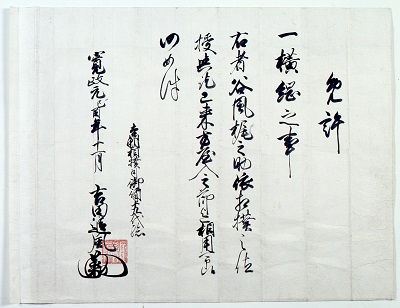
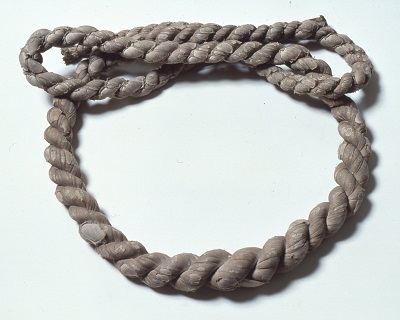
18世紀末には、強豪力士を格付ける「横綱」が登場し、将軍が江戸城内で相撲を直々に観覧する「上覧相撲」が催されました。将軍のお墨付きを得て、相撲の社会的地位は飛躍的に向上します。
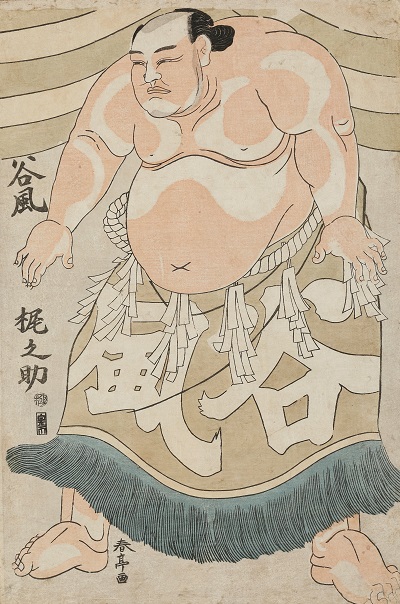
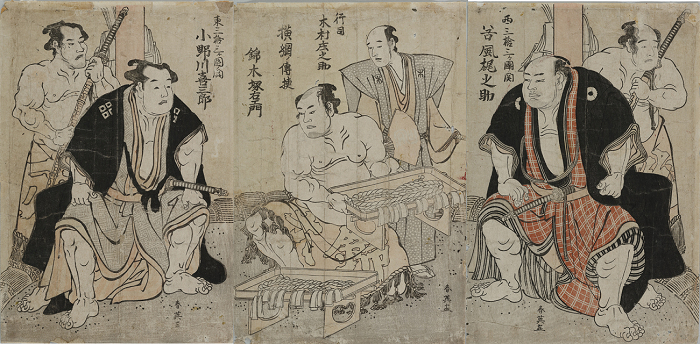
その背景には空前の相撲ブームがありました。なかでも世間を沸かせたのが、初の横綱となった二人の力士、谷風梶之助(1750-1795)とそのライバル小野川喜三郎(1758-1806)。勝川春章(1743-1792)とその一派は、彼らの個性を捉えた似顔絵や取り組みの光景を描き、興行の熱狂を伝えました。
谷風や小野川が活躍した天明・寛政年間(1781-1801)、多色摺の木版画「錦絵」もまた、東洲斎写楽(生没年不詳)や喜多川歌麿(1753-1806)といったスター絵師の名が飛び交う黄金期を迎えていました。
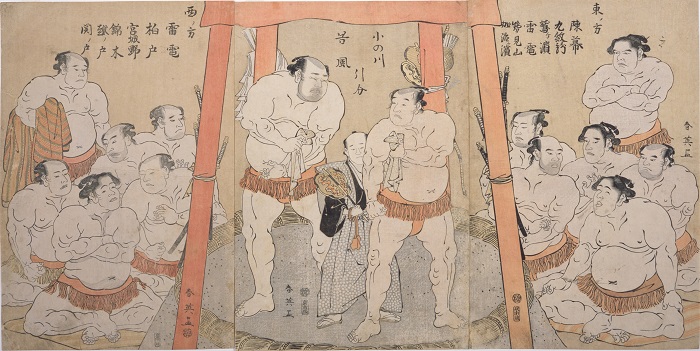
第2章 力士と絵師の協奏
―江戸絵ハ此地の名物にして、芝居歌舞伎、新吉原の花魁、あるハすまひ取の立すがた、いづれも彩色濃にして、動くが如く笑うが如く―
秋里籬島編『東海道名所図会』(1797年刊)
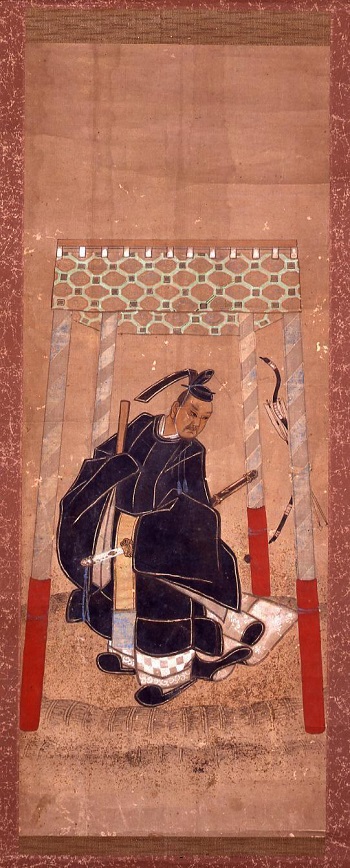
役者絵で一家を成した春章の円熟期と、天明・寛政年間(1781-1801)の谷風・小野川の活躍期が重なったことは、浮世絵と相撲の双方にとって幸運でした。勝川派の絵筆は力士にも及び、面貌や表情のみならず、体格や肉付き、土俵入や取組の姿態にいたるまで、各々の特徴を捉えました。個性あふれる相撲取の姿が役者絵や美人画と並んで江戸市中を彩り、観衆であふれかえる取組の光景は興行の熱狂を喧伝しました。
東洲斎写楽の約10カ月というあまりに短い作画期も、そのブームと重なっていました。
文政年間(1818-1830)に勝川派の絵師が相次いで没すると、役者絵とともに相撲絵も歌川派の独壇場となり、なかでも売れっ子の歌川国貞(1786-1865)は、千数百点にのぼる相撲絵をのこしたといいます。
相撲と錦絵、力士と絵師は、相互に刺激し合い支え合いながら人々を魅了し続けました。
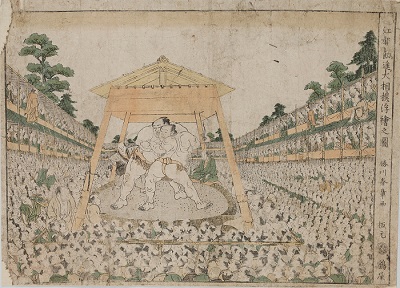

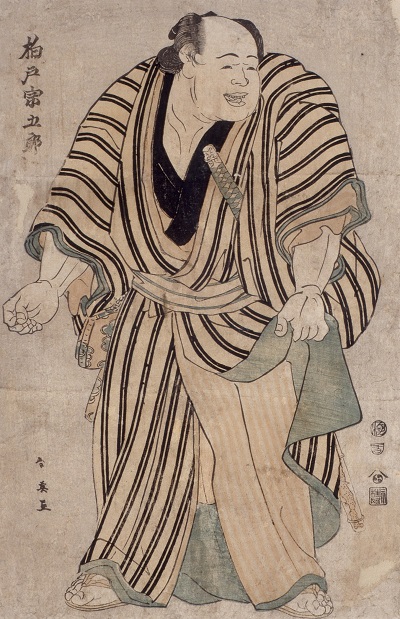
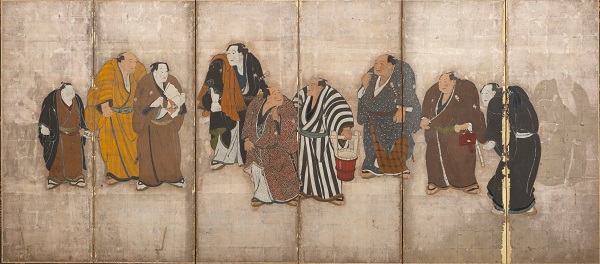
第3章 相撲と錦絵と都市・江戸
―江都繁華の中、太平を鳴らすの具、二時の相撲、三場の演劇、五街の妓楼に過ぐるは無し―
寺門静軒『江戸繁昌記』(1832-36年刊)
江戸の繁華の代表は、年二回の相撲、三座の歌舞伎、五町から成る吉原である。江戸の繁栄の様子を綴った『江戸繁昌記』の序文で、作者の寺門静軒はそう述べます。
『江戸繁昌記』が書かれた頃、1833年(天保4)10月、それまで各所で行われていた相撲の興行は、両国回向院境内に固定されます。回向院や両国橋、隅田川と相撲の組み合わせが定着し、両国は相撲の町になっていきます。さらに相撲は、興行以外でも、さまざまなかたちで人々の生活に根付いていきました。
相撲にまつわる言葉とイメージは、人々の暮らしに染み渡り、今日に引き継がれています。

Explanatory Video
【えどはく学芸員が見どころ紹介】企画展「相撲の錦絵と江戸文化」
企画展「相撲の錦絵と江戸文化」PR動画30秒
えどはくカルチャー「相撲と錦絵―黄金期の協奏―」
春木晶子(当館学芸員)
8月19日(木)14:00~15:00
*事前予約制。申込締切日7月30日(金)。
応募方法や受講料などの詳細はこちらをご覧ください。
